
Share
What materials do you use in compression moulding?
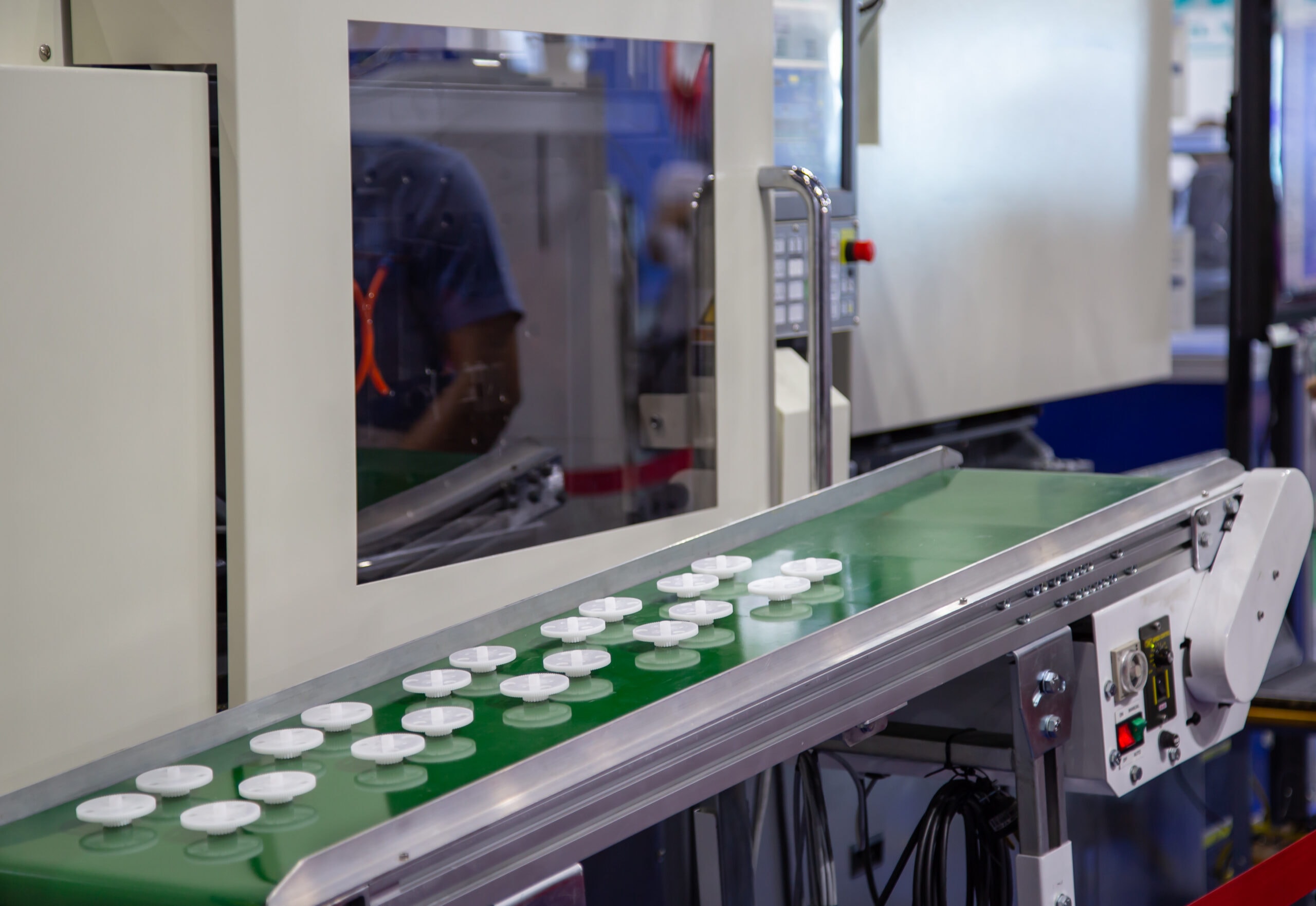
If you’re considering compression moulding for a new product line, you may be wondering what materials you can use.
That’s a fair and important question, because the material you use leads to certain natural advantages and disadvantages.
Compression moulding is most commonly used for thermoset plastics and composites. Once these materials cure, they can’t be remelted, which is why you might choose them for heat-resistant, stable, high-strength components, for instance.
Below, our team at Talisman Group has put together a practical introductory guide to the main material families used in compression moulding, what you might use them for, and how to choose the right one for your moulded parts.
Thermosets vs thermoplastics
It can be easy to get thermosets and thermoplastics mixed up.
Compression moulding, the subject of this page, typically uses thermosets and composites. Thermosets are plastics that permanently harden when cured, while composites combine resins with fibres for added strength and stiffness. Examples include epoxy resin, phenolic resin, polyester resin and polyurethane.
Injection moulding, on the other hand, tends to use thermoplastics. Thermoplastics soften when you reheat them, so they can be remelted into new shapes. Examples include polypropylene, polyethylene, ABS and PVC.
So, if you’re developing a part that must stay rigid under heat, resist warping or meet strict fire/electrical requirements, thermoset compression moulding is likely the most sensible route.
Thermoset resins
Across the industry, the most common materials used in compression moulding are thermoset resins. These include phenolic (Bakelite), epoxy, polyester, melamine, urea-formaldehyde, polyurethane and alkyd resins.
All thermosets share one key trait. They cure permanently and won’t remelt. But beyond that, their properties can vary widely.
Thermosets start out as mouldable materials, usually in powder, sheet or dough-like form. During compression moulding, heat and pressure trigger a chemical reaction that permanently hardens the material. Once this curing process finishes, the structure becomes fixed, and you can’t melt or reshape it after this point.
This permanent change is what makes thermosets valuable. Unlike thermoplastics, which soften again when reheated, thermosets stay rigid and stable even at higher temperatures. That means parts made from them are less likely to warp, creep or lose strength when exposed to heat, load or long-term use.
Because of this stability, thermoset resins are often chosen for technical components. They’re widely used in applications such as electrical housings, insulators, automotive under-bonnet parts, industrial equipment components and structural panels. With thermosets, you gain dimensional stability under heat and load, strong mechanical performance for demanding environments and potential to meet fire performance requirements (depending on the compound).
However, because thermosets don’t remelt after curing, you can’t easily fix or rework a poor design. It also affects your end-of-life options. So, take the time to carefully design the part so you don’t waste any early production runs, and be very deliberate about specification and quality control.
Thermoset composites: SMC and BMC
If you need a combination of strength, stiffness and low weight, the alternative material group used in compression moulding is fibre-reinforced thermoset composites such as Sheet Moulding Compound (SMC) or Bulk Moulding Compound (BMC).
These compounds combine a thermosetting resin (discussed above) with reinforcement (often short glass fibres) and fillers. Both SMC, a fibre-reinforced plastic sheet, and BMC, a fibre-reinforced plastic paste, are suitable for compression moulding.
Where composites make sense for you
Compression-moulded SMC and BMC parts are the best option for larger, more structural parts where you want rigidity and strength without moving to metal. Use them for everything from electrical enclosures and automotive panels to industrial housings and large one-piece rail components.
‘Material-adjacent’ considerations
Your ‘material’ decision often isn’t just about the choice of resin. For instance, you might also need threaded inserts moulded in or added after moulding, or colour options, depending on the material type. If your product needs metal inserts for assembly, or colour for safety or branding, you should specify this to your manufacturer or supplier early. These requirements might affect the optimal material choice, tool design and process settings. And with thermosets and composites, it’s important to get it right first time.
How to choose the right thermoset or composite
Within the category of thermosets, there are many different materials. Each thermoset suits certain applications best. Here are a few examples:
· Phenolic resins – Very heat-resistant and electrically insulating. Often used for electrical components and high-temperature environments.
· Epoxy resins – Extremely strong and adhesive, with excellent chemical resistance. Often used in structural parts and composites.
· Polyester resins – Lower cost and versatile. Often used for panels, housings, and general industrial components.
· Melamine resins – Hard, scratch-resistant surfaces. Often used for durable, aesthetic surfaces.
Talk to Talisman Group about your material shortlist
The best way to find the optimal material for your compression-moulding project is to speak with our experts. Tell us what your component must withstand (heat, load, fire, electrical, chemicals, etc.) and how you plan to use it. With our help, you’ll be able to quickly narrow down the material options and move towards a reliable specification.
With facilities across the country ready to help you produce your components, we’re perfectly situated to assist in your design, refinement, and production. Get in touch with our team today to discuss your compression moulding material options.